
FastVLM 0.5B
Browser & small-device experiments
Start with image descriptions, text extraction or chart questions. Try a representative image before integrating it into a workflow.
Try the 0.5B demoApple vision-language models
Ask questions about images. Start in your browser, then build with Python or WebGPU.
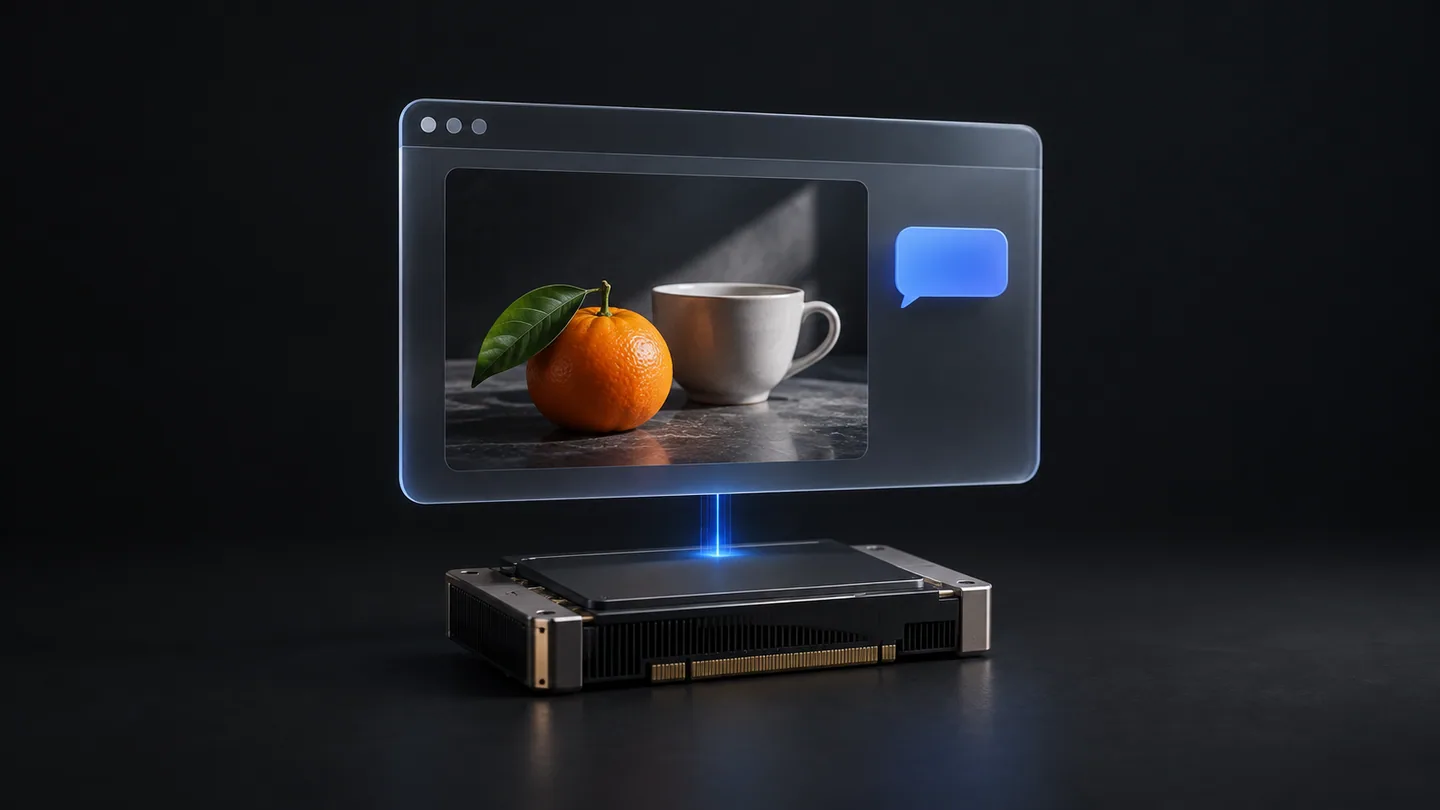
FastVLM combines Apple’s FastViTHD vision encoder with a language model to understand images and text together. Explore the 0.5B, 1.5B and 7B variants, choose the right checkpoint and try your own images.
Browser demo: FastVLM-0.5B · WebGPU + shader-f16 · about 1.1 GB on first run
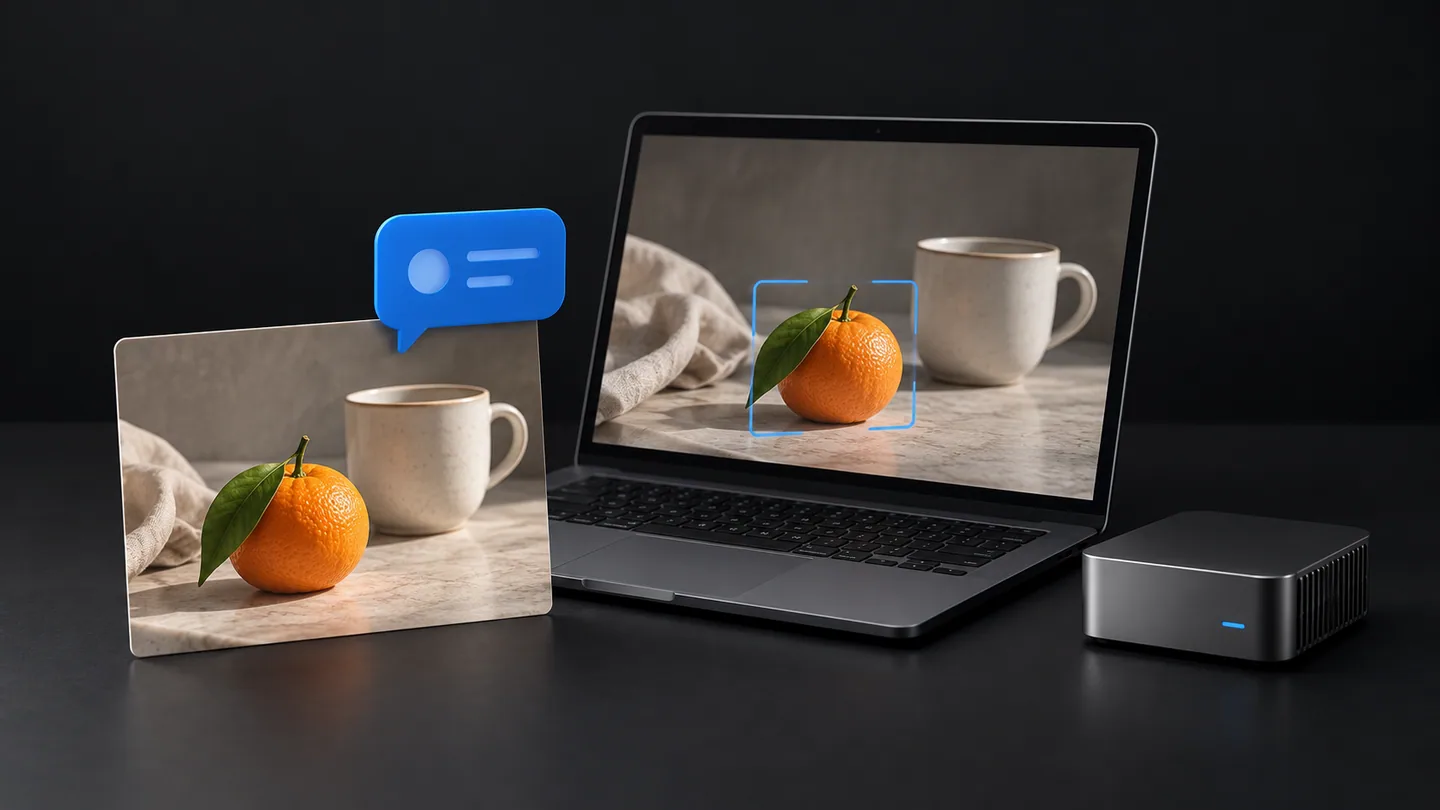
Describe a scene, read text or ask about the details.
Open the playgroundModel size, checkpoint format and runtime are separate choices. This playground runs a community ONNX conversion of 0.5B. Larger variants need a compatible local environment.
Browser & small-device experiments
Start with image descriptions, text extraction or chart questions. Try a representative image before integrating it into a workflow.
Try the 0.5B demoLocal development
Explore the middle-size model and its Stage3 checkpoint. Match the files to PyTorch, Transformers or Apple’s native app.
Read the Stage3 guideHigher published benchmark scores
Compare quality gains with memory and runtime requirements. Evaluate performance on the hardware you intend to use.
Compare models and downloads
Models & downloads
Compare 0.5B, 1.5B and 7B, official benchmark scores and checkpoint formats.
Stage3 setup
Choose the right training stage and files for PyTorch or Apple's native app.
Python & Transformers
Set up Transformers, ask a question about an image and fix common first-run errors.
WebGPU tutorial
Download a complete starter with streaming, cancellation and JSON export.
Published scores measure specific datasets and settings. They do not predict the quality or latency of every browser conversion. Compare sizes using the same benchmark row, then check your own images and requirements.
See scores and comparison conditionsThe image playground processes images and questions locally. It downloads model files from Hugging Face. Usage events contain action categories and timings rather than your content. The optional camera demo is a separate Hugging Face embed opened on request.
The browser model needs WebGPU, shader-f16 and enough free GPU memory. A successful compatibility check does not guarantee enough memory. The Python guide provides another runtime.
Stage3 identifies a training checkpoint. The 1.5B label describes the model’s size. Choose both the checkpoint and the files for your runtime.
AI IDE List is an independent developer resource and is not affiliated with Apple. FastVLM is developed by Apple researchers. Use the official sources below for releases, licenses and research details.
Explore other Apple models and browser tools: Apple model overview, browser tools and on-device VLM comparison.