목차8개 섹션
Editorial snapshot from September 2026. Prices, models and interface labels may change; this is a practical guide, not a live product feed.
Separate reusable task instructions from project constraints and external tools.
Choose the smallest useful mechanism
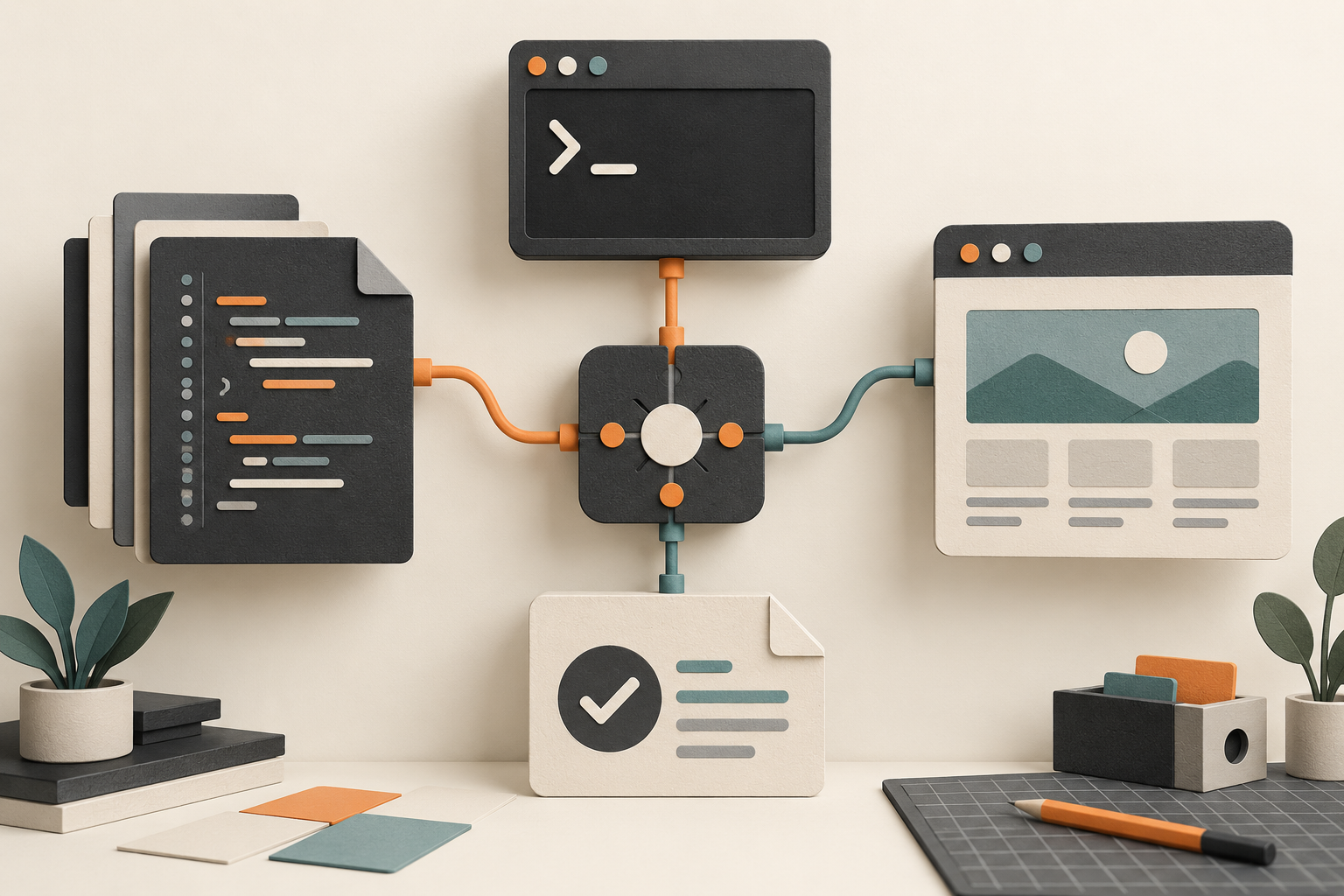
Use a rule for a persistent project convention, a skill for a repeatable task procedure and MCP for access to an external tool or data source. These are working distinctions for planning your setup; exact loading behavior depends on the client.
Design a skill around an outcome
A useful skill explains when it applies, the inputs it needs, the steps to follow and how to verify the result. For example, a release-note skill should name the commit range, group changes for readers and verify issue links.
Avoid copying configuration across clients blindly
TRAE, Cursor and Zed advertise skills, but that does not establish identical directories, frontmatter or permission behavior. Follow the documentation for the installed client. Test a skill on a small task before using it for a release or migration.
Keep memory and agent roles explicit
Record durable project facts separately from temporary task progress. When creating multiple agent roles, give each a concrete input and output, then review their combined changes. More agents are useful only when the work can be divided clearly.
A complete first task: change, verify and review
-
Choose a small repository that already builds. Save a clean Git checkpoint and write down the command that currently passes. This gives you a baseline for distinguishing an existing problem from a generated regression.
-
Describe one observable result: for example, add a required field to an existing form and show an error without submitting invalid data. Include the relevant files, existing validation helper and the behavior that must stay unchanged.
-
Ask for a short plan before editing. Check that it names the affected components, data flow and verification command. Resolve missing context before allowing a broad refactor.
-
Review the diff in small batches. Check dependencies, generated files, environment variables and error handling as well as the visible result. Run the project checks and exercise both the successful and failing paths.
-
Inspect the usage record after the task. Record the accepted outcome, review time and usage consumed. Repeat on a second representative task before choosing a paid plan or moving a team workflow.
A task brief you can adapt
Goal: describe the user-visible change.
Context: list the relevant files and existing implementation.
Constraints: keep the public API and use the existing dependencies.
Verification: run the repository's documented checks and test the failure path.
Completion: summarize changed files, checks performed and remaining limitations.
When the result is not usable
A successful request does not prove the code works. If the agent edits the wrong files, reduce the scope and supply the entry point explicitly. If a command fails, reproduce it in the same terminal environment before changing the prompt. If an MCP connection fails, separate server startup, credentials and client configuration. If usage is exhausted, check the account balance and selected model before repeating the same request. Keep a failed patch small enough to revert without losing unrelated work.
Common questions before you switch
Does a paid subscription mean unlimited agent work?
No. Subscription price, included usage, model access and additional usage are different things. A plan with unlimited autocomplete does not imply unlimited model requests or cloud tasks.
Should I connect every MCP server at once?
Start with the one integration needed by your current task. Confirm that it starts, exposes the expected tools and receives only the intended project context before adding another.
How should I compare two AI editors?
Use the same repository, task and acceptance checks. Compare correct changes, review effort, setup friction and recorded usage. A long feature list does not establish which editor produces better code for your project.
Related TRAE guides
계속 읽기
같은 주제와 도구에 연결된 글입니다.
관련 도구
이 글의 주제와 가까운 디렉터리 항목을 살펴보세요.