

On This Page8 sections
Key Takeaways
- GPT-6 Sol has not been officially announced by OpenAI as of September 16, 2026. OpenAI's public model catalog currently lists GPT-6 Astra alongside GPT-5.6 Sol, Terra, and Luna, but not GPT-6 Sol.
- The strongest official signal is that OpenAI plans a major release wave this week. Tibo Sottiaux said this week's launches would be at a level people might have expected from DevDay, while Sam Altman followed with "big 🚢 this week."
- The specific claim that GPT-6 Sol will launch on Thursday, September 17 is still a rumor. It is circulating through unofficial accounts, including a post attributed to Codex Drops, rather than an OpenAI announcement.
- Community screenshots and reports suggest that the string
gpt-6-solmay already be appearing in testing or staged environments, but those sightings do not prove public availability. - A GPT-6 Sol tier would make product sense: GPT-6 Astra is positioned as OpenAI's most capable model at $10 per million input tokens and $50 per million output tokens, while GPT-5.6 Sol costs $4 input / $20 output. A lower-cost GPT-6 workhorse would fill a clear gap between frontier capability and everyday production economics.
GPT-6 Sol: What Is Actually Confirmed?
The current rumor cycle is unusually strong because it combines three different signals: official launch teasing, community model sightings, and a plausible gap in OpenAI's product lineup.
However, those signals should not be treated as equivalent.
As of September 16, OpenAI's official API documentation lists GPT-6 Astra as its most capable model for difficult end-to-end work. The same catalog still lists GPT-5.6 Sol as the flagship model for complex professional work, with GPT-5.6 Terra and GPT-5.6 Luna occupying lower-cost tiers. There is currently no GPT-6 Sol entry in that official model list.
That means the safest status is:
- GPT-6 Astra: officially released.
- GPT-5.6 Sol: officially available.
- GPT-6 Sol: strongly rumored, with possible testing evidence, but not officially announced.
- Thursday launch: unconfirmed.
This distinction matters because model names frequently appear in experiments, routing layers, evaluation environments, screenshots, and third-party interfaces before a public launch. A model identifier can be real without the model being generally available.
Why Everyone Is Talking About Thursday, September 17
The most specific rumor currently circulating says:
GPT-6 Sol is coming this week, with a Thursday release.
The wording appears in a post attributed to the unofficial Codex Drops account, which stated that GPT-6 Sol would be released on Thursday and described the week as a major one for OpenAI.
Because today is Wednesday, September 16, 2026, "Thursday" in that post points to September 17, 2026.
The important caveat is that this date has not been published by OpenAI, Sam Altman, the OpenAI Developers documentation, or the official OpenAI model catalog.
That makes September 17 a credible rumor date, not a confirmed launch date.
For publishers and developers, headlines such as "GPT-6 Sol Confirmed for Thursday" currently overstate the evidence. A more accurate framing is "GPT-6 Sol Rumored for Thursday as OpenAI Teases a Major Release Week."
The Strongest Signal Is Not the Leak—It Is OpenAI's Own Teasing
The most meaningful evidence comes from OpenAI leadership.
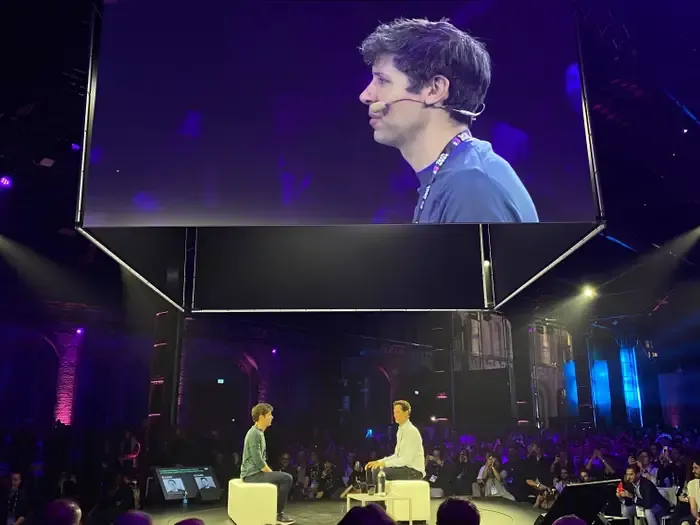
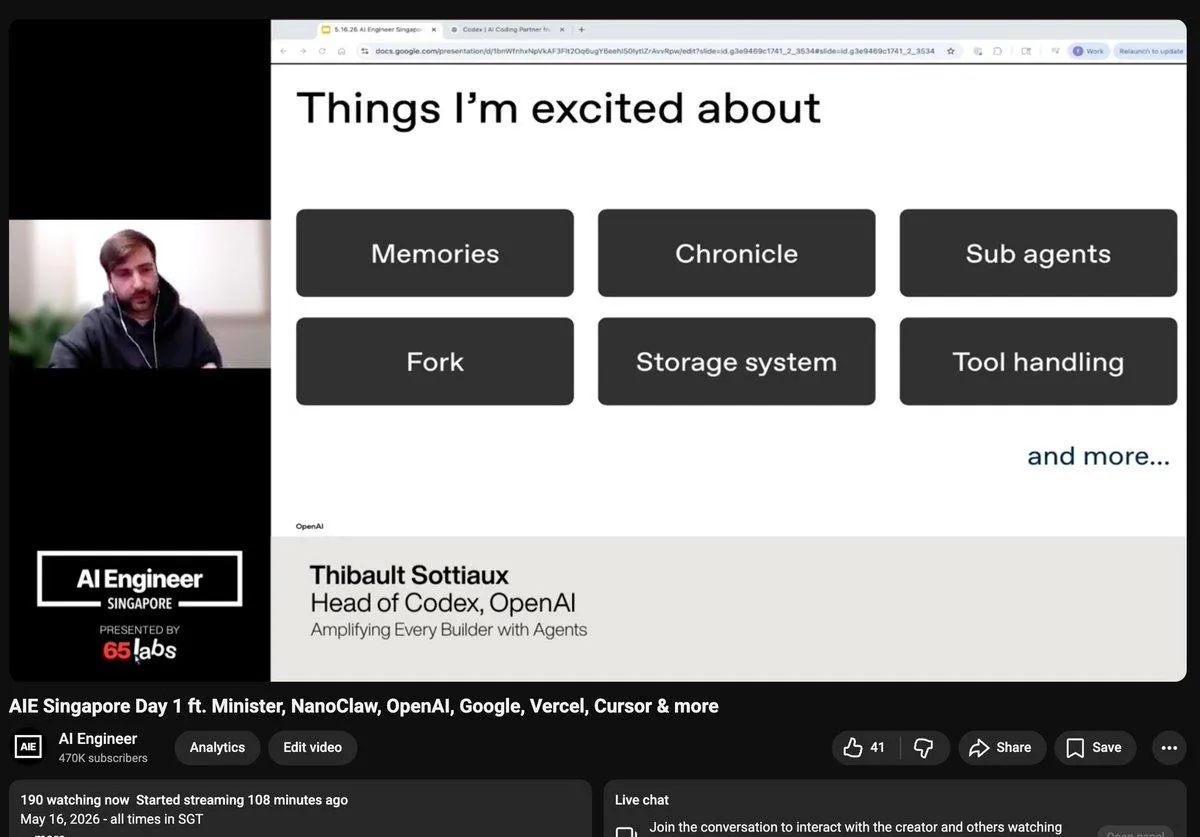
Tibo Sottiaux, who works on Codex and ChatGPT at OpenAI, wrote that this week would bring a level of launches people could have expected from DevDay. His public feed also shows a rapid cadence of recent Astra-related releases and continued hints about additional work landing before DevDay.
Sam Altman then amplified the signal with:
"big 🚢 this week and then for devday 🚢🚢🚢🚢🚢🚢"
That does not name GPT-6 Sol, but it confirms that OpenAI itself expects at least one significant release this week, followed by additional launches around DevDay.
This is why the Sol rumor deserves more attention than a typical anonymous model leak. The release window has independent support from OpenAI leadership even though the model identity does not.
DevDay Makes the Timing More Interesting
OpenAI DevDay 2026 is scheduled for Tuesday, September 29 in San Francisco, with an opening keynote featuring Sam Altman at 10:00 a.m. Pacific Time.
A major release roughly two weeks before DevDay would initially seem unusual. In practice, it could fit OpenAI's current strategy.
Shipping a broadly useful model before DevDay would allow the conference to focus on:
- new developer APIs,
- agent infrastructure,
- model orchestration,
- Codex features,
- computer-use workflows,
- deployment tooling,
- and demonstrations built on models that developers can already access.
Tibo's wording is especially notable because he explicitly compared this week's shipping level with what users might have expected from a DevDay.
That does not prove Sol is the release, but it makes a substantial model or platform update more plausible.
Why a GPT-6 Sol Tier Would Make Strategic Sense
OpenAI's current lineup leaves a visible economic gap.
GPT-6 Astra is the frontier option. OpenAI describes it as its most capable model for difficult end-to-end work across reasoning, coding, research, computer use, and professional tasks. It has a 1.05 million-token context window, supports up to 128,000 output tokens, and costs $10 per million input tokens and $50 per million output tokens.
GPT-5.6 Sol remains much cheaper at $4 per million input tokens and $20 per million output tokens, while retaining a 1.05 million-token context window and 128,000-token maximum output.
That creates an obvious product opportunity.
A future GPT-6 Sol could potentially serve users who want more of the GPT-6 generation's capability without paying Astra pricing for every request.
The likely product logic would be:
- Astra: hardest reasoning, long autonomous tasks, high-value agent work.
- Sol: high-quality daily coding, analysis, research, and agent execution.
- Luna: high-volume, latency-sensitive, or cost-sensitive work.
This is an inference from OpenAI's existing naming and pricing structure, not a confirmed specification for GPT-6 Sol.
GPT-6 Astra vs. GPT-5.6 Sol: The Gap a New Sol Could Fill
| Specification | GPT-6 Astra | GPT-5.6 Sol |
|---|---|---|
| Official status | Available | Available |
| Model ID | gpt-6-astra | gpt-5.6-sol |
| Positioning | Most capable model | Flagship professional model |
| Context window | 1.05M tokens | 1.05M tokens |
| Max output | 128K tokens | 128K tokens |
| Input price | $10 / 1M tokens | $4 / 1M tokens |
| Output price | $50 / 1M tokens | $20 / 1M tokens |
| Tool use | Supported | Supported |
| Computer use | Supported | Supported |
| MCP | Supported | Supported |
The table highlights why Sol matters even if Astra remains the intelligence leader.
For production agents, cost per completed task can matter more than maximum benchmark performance. A model that completes a software task in one reliable pass at a lower token cost can be economically more useful than a stronger model that consumes significantly more budget.
The biggest unanswered question is therefore not simply whether GPT-6 Sol is "smarter" than Astra.
It is whether GPT-6 Sol delivers a better combination of:
- capability,
- latency,
- token efficiency,
- tool-use reliability,
- coding quality,
- long-task stability,
- and price.
What the gpt-6-sol Sightings Actually Tell Us
Several community posts have shared screenshots or reports claiming that gpt-6-sol has appeared in the wild. One widely circulated post from Fandu was amplified by AI developers as evidence that OpenAI may already be testing the model behind the scenes.
The OpenAI Developer Community also contains discussion of alleged Arena or API appearances, but those posts explicitly frame the situation as speculation rather than an official release.
These sightings are useful evidence, but they have limitations.
A model name appearing in an interface can mean several different things:
- an internal checkpoint is being evaluated;
- a staged deployment exists but is not publicly enabled;
- an A/B routing experiment is active;
- a proxy or third-party service is rewriting model identifiers;
- a UI has added a placeholder before the backend is available;
- or the screenshot itself is incomplete or misleading.
For that reason, model-name sightings should increase confidence that GPT-6 Sol exists, but not confidence that a public launch date is fixed.
Do Not Trust Model Self-Identification as Proof
One common mistake during model launch rumors is asking a model which model it is and treating the response as authoritative.
That method is unreliable.
A model may receive a system label, infer an identity from context, repeat information from a routing layer, or simply generate a plausible answer. The model's natural-language response is not a cryptographic attestation of the backend serving the request.
Likewise, third-party API gateways can map one public name to another upstream route.
Stronger verification requires infrastructure-level evidence.
How Developers Can Verify GPT-6 Sol When It Launches
The most reliable signals will come from OpenAI-controlled surfaces.
Check these in order:
- OpenAI's official model catalog for a
gpt-6-solentry. - OpenAI API documentation for specifications, pricing, supported tools, rate limits, and snapshots.
- The API model list for an accessible model identifier.
- ChatGPT or Codex model pickers for product availability.
- OpenAI release notes or official social accounts for rollout details and plan restrictions.
Developers with API access can inspect the list of models returned to their account:
curl https://api.openai.com/v1/models \
  -H "Authorization: Bearer $OPENAI_API_KEY" \
  | jq '.data[].id' \
  | grep 'gpt-6'
A returned model ID is stronger evidence than a screenshot from a third-party interface, although account-level access can still vary during a phased rollout.
What to Watch If GPT-6 Sol Appears
The model name itself will be the least interesting part of the launch. The critical details will be the specifications around it.
1. API Pricing
GPT-5.6 Sol currently costs $4 input and $20 output per million tokens, while GPT-6 Astra costs $10 and $50.
A GPT-6 Sol priced substantially below Astra could become the default production model for developers even if Astra remains stronger on the hardest tasks.
2. Reasoning Effort
GPT-6 Astra supports multiple reasoning-effort levels, while GPT-5.6 Sol also supports a wide range of reasoning settings.
If GPT-6 Sol preserves granular reasoning controls, developers may be able to optimize cost and latency per task instead of switching models.
3. Codex Usage Economics
Community discussion around Astra already focuses heavily on usage consumption. Users report that high-end autonomous coding can burn through allowances quickly, which increases demand for a more efficient daily model. These reports are anecdotal rather than official measurements, but the demand pattern is clear in Codex communities.
A new Sol would be especially important if it can handle most repository work while reserving Astra for architecture, difficult debugging, or final review.
4. Tool-Use Reliability
For agentic systems, raw benchmark scores are only part of the story.
A practical Sol release should be evaluated on:
- function-call accuracy,
- shell-command reliability,
- patch quality,
- browser and computer-use consistency,
- MCP tool selection,
- context management,
- recovery after tool errors,
- and the ability to finish long tasks without unnecessary clarification loops.
5. Context and Output Limits
Both GPT-6 Astra and GPT-5.6 Sol currently expose 1.05M-token context windows and 128K maximum outputs.
It would be tempting to assume GPT-6 Sol will inherit those limits. That assumption should not be published as fact until OpenAI provides a model card or API documentation.
The Most Important Benchmark Will Be Cost per Completed Task
Launch-day benchmark charts often emphasize pass rates, intelligence scores, or token throughput.
For developers, a more useful metric is:
total cost to complete a real task successfully.
Suppose one model is 15% more capable but requires twice the reasoning tokens, longer execution time, and more retries. For a large agent fleet, the apparently stronger model may be the worse production choice.
A serious GPT-6 Sol evaluation should therefore measure:
- success rate on first attempt;
- total input and output tokens;
- reasoning effort required;
- wall-clock completion time;
- number of tool calls;
- number of failed or repeated tool calls;
- human intervention rate;
- regression rate after code edits;
- and final cost per accepted task.
This is where a Sol-tier model could become more important than Astra for everyday engineering.
Common Misreadings to Avoid
"Sam Altman confirmed GPT-6 Sol"
No. Sam Altman confirmed a big ship this week, not the identity of the release.
"OpenAI confirmed a Thursday release"
No. The Thursday claim currently comes from unofficial leak and community accounts, not an OpenAI release announcement.
"GPT-6 Sol is already in the API"
There are community reports of sightings, but OpenAI's public model catalog still does not list GPT-6 Sol as of September 16.
"GPT-6 Sol will replace Astra"
There is no evidence for that conclusion. OpenAI explicitly positions Astra as its most capable model. A Sol tier would more logically complement Astra by improving the capability-to-cost tradeoff.
"GPT-6 Sol will have the same context window and price structure as existing models"
Unknown. Those details should remain marked as unconfirmed until OpenAI publishes them.
What Happens Next
The next 24 to 48 hours should resolve much of the uncertainty.
If GPT-6 Sol is genuinely scheduled for Thursday, the strongest confirmation is likely to appear rapidly across multiple official surfaces: the API model catalog, developer documentation, Codex or ChatGPT model selection, and OpenAI's own announcement channels.
If Thursday passes without a Sol release, the broader rumor does not necessarily disappear. Sam Altman and Tibo have still independently signaled a significant release week, and DevDay follows on September 29.
The correct approach is therefore to separate the existence of a likely GPT-6 Sol project from the certainty of a September 17 public release.
The first is increasingly plausible.
The second remains unconfirmed.
Conclusion
GPT-6 Sol is shaping up to be one of the most credible OpenAI model rumors of 2026, but the evidence needs to be read carefully.
OpenAI has officially signaled a major shipping week. Community reports indicate that gpt-6-sol may already exist in testing or staged systems. The current lineup also creates a strong strategic reason for OpenAI to introduce a cheaper GPT-6 workhorse beneath Astra.
What OpenAI has not done is publicly confirm that GPT-6 Sol launches on Thursday, September 17.
Until an official model page, API identifier, release note, or OpenAI announcement appears, the Thursday date should remain labeled as a rumor.
For developers, the real launch-day questions will be more important than the name: price, latency, reasoning efficiency, Codex usage, tool reliability, context limits, and cost per completed task. Those metrics will determine whether GPT-6 Sol becomes the everyday GPT-6 model—or simply another tier beneath Astra.
Continue Reading
More articles connected to the same themes, protocols, and tools.


Referenced Tools
Browse entries that are adjacent to the topics covered in this article.