

Mastra Factory
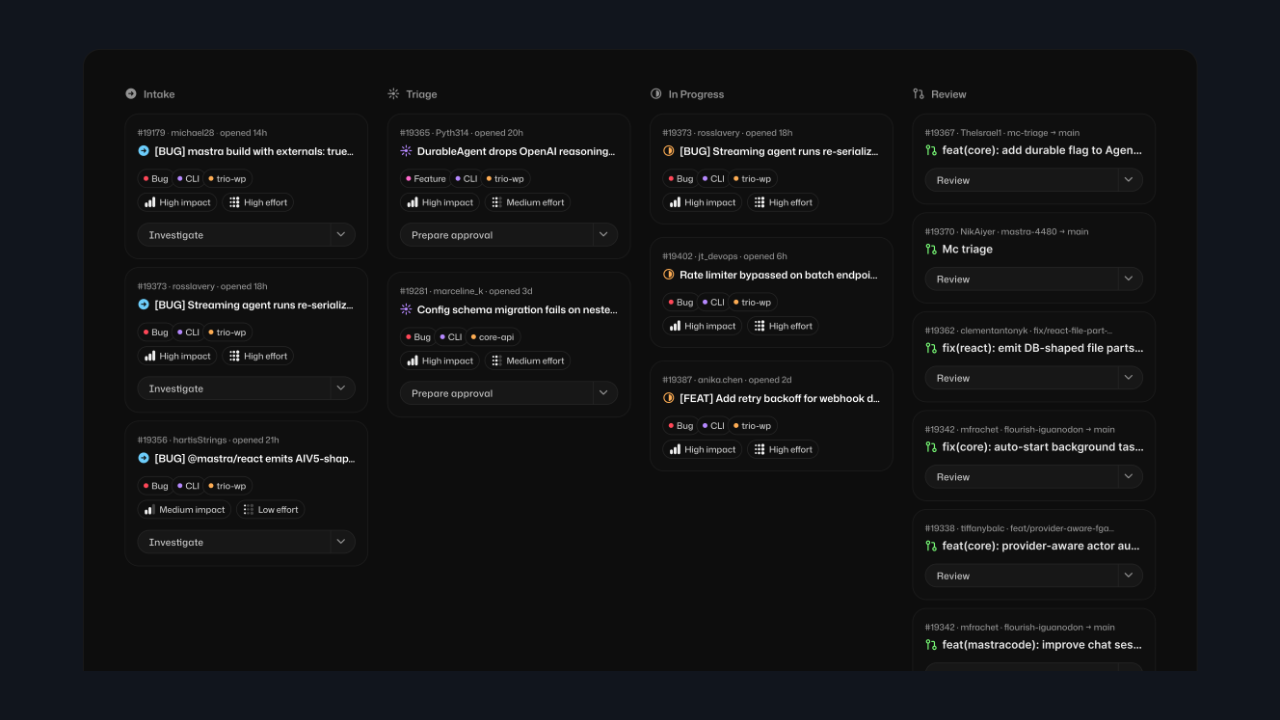
A configurable software delivery factory with agent stages and human review gates.
Information checked: Sep 12, 2026 ·View sources
Tool details
- Type
- Autonomous agents
- Platforms
- Not verified
- Free plan
- Yes
- Open source
- Yes
- Bring your own key
- Yes
- Local models
- Not verified
Overview
Best for
- Teams automating repeatable issue-to-PR work
- Developers building a customizable delivery pipeline
Strengths
- Makes intermediate plans and review stages visible.
- Allows teams to customize and self-host the delivery workflow.
Limitations & trade-offs
- Users wanting a zero-setup autocomplete extension
- Requires model access and repository integration before useful work can run.
- Self-hosting also means operating authentication, storage, and execution infrastructure.
Get started
npm create factory@latest my-factoryPricing & usage limits
Official pricingFree tier available
Hosted resource allowance includes 24 CPU hours and 100,000 observability events. Model usage and overages are separate.
Includes 250 CPU hours and 1 million observability events. This is platform pricing, not an all-inclusive agent subscription.
Provide and operate your own model access, authentication, storage, and sandbox infrastructure.
Pricing checked: Sep 12, 2026 · Subscription, usage limits, and model costs may be billed separately.
Features & details
Delivery pipeline
- Issue intake, triage, planning, building, and review stages
- Configurable workflow and human review gates
- GitHub integration with optional Linear intake
Deployment choices
- Generated Factory project you can customize
- Managed platform resources or self-hosted infrastructure
Turning an issue into a reviewable change
Mastra Factory organizes software delivery as stages with explicit handoffs. A useful input is an issue with reproduction steps, expected behavior, and an acceptance test. That gives the planning and review stages something concrete to judge.
It is a separate product from Factory's Droid agents despite the shared word in their names.
Set up a small delivery pipeline
- Create the Factory project outside the repository you want agents to modify, following the Factory documentation.
- Connect the target GitHub repository and a supported model provider; connect Linear if it is your intake system.
- Configure the workflow and decide which transitions require human review.
- Submit a small issue, inspect the plan, and review the resulting diff and test evidence before merging.
The project generator is:
npm create factory@latest my-factoryChoose what you want to operate
A local Factory server can still depend on managed platform services. Fully self-hosted operation requires explicitly replacing those dependencies. Start with one repository and a narrow issue type so you can measure rejected plans, failed tests, and review time before expanding the pipeline.
Model support & data privacy
Privacy & data handling
Data handling depends on the chosen model providers, authentication, database, and sandbox deployment. Running the UI locally alone does not make the whole workflow self-hosted.
Guides, reviews & fixes
View allNo published guides yet. Start with the official documentation above.
Product updates
No verified product updates listed yet. Follow this tool to see new relevant content in Saved.
See the content timelineAlternatives
Sources & verification
Verification dates record when this directory checked the information. Product release dates appear separately above.