
本页目录8 个章节
关键要点
- Cursor 2.0 标志着从 AI 辅助编辑,转向 Agent 主导的软件开发。 它不再只是 VS Code 风格编辑器上的 AI 自动补全层,而是在走向一个协同式 Agent 工作区。
- Composer 是 Cursor 试图建立战略护城河的关键。 通过推出自己的编码模型,Cursor 可以降低对第三方 frontier models 的完全依赖,并优化延迟、成本和编辑器内工作流。
- 多 Agent 界面改变了开发者的角色。 开发者不再只是向一个助手要一个答案,而是可以比较多个 Agent 生成的实现,再决定是否合并。
- 安全已经成为一级购买标准。 Agentic IDE 可以写文件、执行命令、修改配置、调用 MCP 工具,因此 prompt injection 和 workspace trust 比传统编辑器更严肃。
- Cursor 仍然最适合快速迭代的产品工程团队。 如果团队要求完全确定性的输出、严格的本地执行,或者不加额外控制就具备成熟企业治理,Cursor 就不太适合。
为什么 Cursor 2.0 重要?
Cursor 最初的优势很简单:它让 AI coding 在编辑器里变得自然。开发者可以自动补全、与 codebase 对话、编辑多个文件、重构代码,而不需要把代码复制到另一个聊天机器人里。
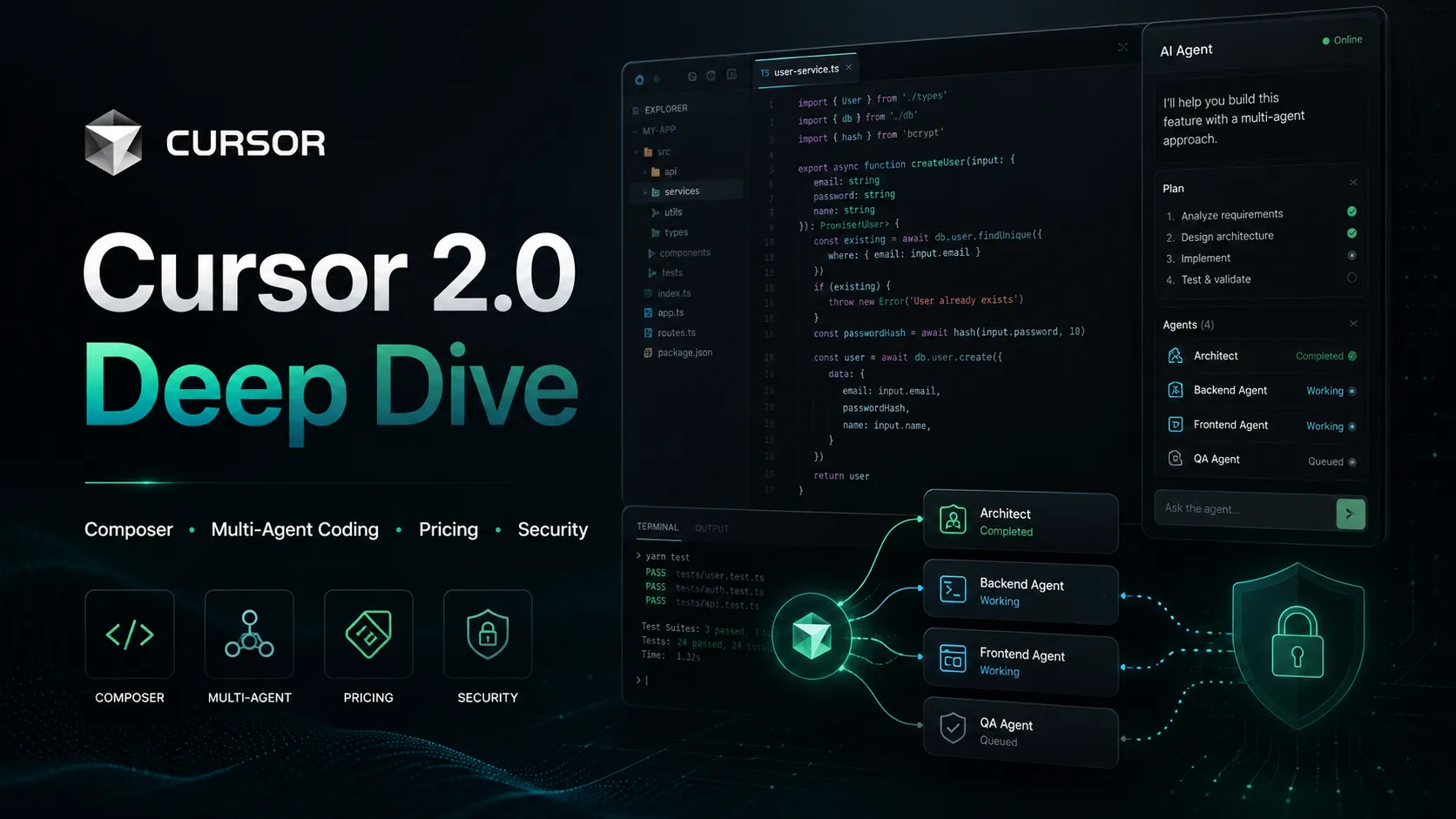
Cursor 2.0 更进一步。它把 IDE 重新组织在 Agent、计划、可审查 diff、并行执行 之上。Cursor 在 2025 年 10 月 29 日正式发布 Cursor 2.0 和 Composer,并将这次发布定位在两项重大变化上:第一个自家 coding model Composer,以及可以并行操作多个 agents 的新界面。([Cursor][1])
这很重要,因为竞争边界正在变化。过去 AI coding 市场主要比的是补全质量。新的市场比的是 workflow control:
- 工具能否理解项目结构?
- 能否在编辑前先规划?
- 能否安全地执行多个实现尝试?
- 能否审查自己的改动?
- 团队能否治理 Agent 可以读、写、执行什么?
Cursor 2.0 重要,是因为它直接瞄准这些更高层次的工作流问题。
用一句话说明 Cursor 2.0
Cursor 2.0 是一款 AI-native code editor,把自家 coding model、多 Agent 编排、规划工作流、具备浏览器感知能力的前端工具,以及 cloud/CLI 界面整合成一个 agentic development environment。
Cursor 当前的产品定位也反映了这个转变。官方产品页描述的是一个横跨 desktop、CLI、GitHub、Slack、Linear、web、mobile 的 Agent。([Cursor][2])
对开发者来说,Cursor 不再只是编辑器替代品,而是在变成 coding tasks 的 development control plane。
Composer:Cursor 的自家 Coding Model
Cursor 2.0 最具战略意义的部分是 Composer。重点不只是模型速度,而是 IDE 公司如果拥有自己的模型,就能优化整个 loop:根据编辑器状态组装 prompt、codebase retrieval、长上下文任务拆解、diff generation、工具使用行为、编辑器内延迟,以及免费、付费、enterprise 用户之间的成本路由。
Cursor 表示 Composer 是为 coding 和 agentic workflows 设计的。实务上,这意味着 Cursor 可以针对常见 IDE 操作调整模型,而不是把模型只当成通用聊天 endpoint。
| 层级 | 传统 AI coding assistant | Cursor 2.0 方向 |
|---|---|---|
| Model | 外部通用模型 | Cursor 优化 coding model + 外部模型 |
| Workflow | Chat 或 autocomplete | Agent planning、execution、review、merge |
| Context | 当前文件或选区 | 项目级 context 和 tool state |
| Output | Suggestion | Diff、command、plan、PR review、agent task |
| Developer role | 有助手的写作者 | Reviewer 和 orchestrator |
Composer 不会让 Claude、GPT、Gemini 或其他 frontier models 变得不需要。它让 Cursor 更能掌控日常 coding tasks 的默认路径。
多 Agent Coding:为什么同时跑多个 Agents 有价值
Cursor 2.0 的多 Agent 界面不是生产力噱头,而是改变 AI coding 的概率模型。
单一 Agent 常见失败有三种:
- 选错架构方向。
- 修改太多或太少。
- 语法上成功,但错过产品意图。
多个 agents 并行执行,可以让开发者获得 implementation diversity。开发者不必接受一个生成结果,而是可以比较竞争中的 diffs。
高价值场景包括大型重构、前端 redesign、API 变更、性能工作,以及 root cause 不明确的 bug 修复。原文提到最多 8 个 agents,这与第三方对 Cursor 2.0 并行 Agent workflow 的描述一致:agents 可以在隔离 worktrees 或 remote environments 中执行,再由开发者审查最终变更。([Codecademy][3])
实务重点:multi-agent mode 最适合有多种合理解法的任务。小修改通常只需要一个精准指令。
Plan Mode:可靠性层
Plan Mode 是 Cursor 重要的工作流改进,因为它处理 AI coding agents 最大的弱点:uncontrolled execution。
如果没有规划,Agent 可能在理解 repository 前就开始编辑,导致改错文件、漏掉隐藏依赖、破坏约定、重写稳定代码,或者只解决局部症状而非根本原因。
可靠流程应该是:检查 codebase、找出相关文件、提出实现路线、等待审查或在限制下继续、生成变更、提供 diff 验证。
复杂任务最好这样指示:
请先分析 codebase。找出相关文件,说明实现计划,列出风险,并在编辑前等待。这能降低意外的大范围修改,让开发者在代码被改动前修正假设。
Browser 与 Design Tools:前端团队为什么受益最多
Cursor 的前端能力变强,是因为 Agent 越来越能把 code changes 和 visual output 连接起来。
原文提到 built-in browser 与 DOM tooling。之后 Cursor changelog 也持续强调 visual 和 browser-driven workflows。2026 年 6 月,Cursor 描述 Design Mode 的改进,包括选择多个 UI elements、理解周围 layout 关系,以及用语音输入排入 UI changes。([Cursor][4])
这对前端很重要,因为许多 bug 不是纯文字问题。CSS、layout、spacing、responsive behavior、component state、visual hierarchy,很难只靠代码上下文修好。
Cursor 特别适合:
- 把粗略 UI requirements 转成 React components
- 修复 layout regressions
- 对齐重复 components
- 调整 Tailwind 或 CSS utility classes
- 将 UI states 接到已有 APIs
- 生成 user flows 的测试
但 visual tooling 不会取代 review。Agent 可能让页面看起来正确,却引入 accessibility、responsiveness 或 state-management 问题。生产流程仍需要 browser testing、responsive checks、accessibility checks、screenshot review、component-level tests。
Pricing:开发者真正应该看什么
Cursor pricing 不只是月费标签,而是 usage shape。
Cursor 官方 pricing page 目前列出免费 Hobby plan,个人付费方案从 $20/month 起,Teams 为 $40/user/month,Enterprise 提供 pooled usage、repository/model/MCP access controls、audit logs、service accounts 等自定义控制。([Cursor][5])
关键是 model usage。Cursor 表示每个 plan 都包含一定模型使用量,用完后仍可通过 on-demand usage 继续,之后再计费。([Cursor][5])
Cursor 也在 2025 年澄清,已从 request-based pricing 转向 included usage,且 “unlimited usage” 指的是 Auto routing,而不是所有模型。([Cursor][6])
采购时真正该问的不是「Cursor 是不是 $20?」而是:
团队会多常使用昂贵的 long-context agent tasks,而不是 lightweight autocomplete 和 Auto routing?
| 用户类型 | 推荐方案逻辑 |
|---|---|
| Casual learner | Free/Hobby 可能足够评估 |
| Individual developer | Pro 通常是第一个正式层级 |
| Daily agent user | 如果复杂 agent tasks 很频繁,Pro+ 更现实 |
| Heavy builder | Ultra 是为高量 agent usage,不是 casual coding |
| Team | Teams 或 Enterprise 重点在 governance、billing、privacy、controls |
Security Risks:Cursor 最严肃的问题
一篇扎实的 Cursor 评测必须直接谈安全。Agentic IDE 跟 autocomplete tools 不是同一种风险类别。
传统编辑器等待开发者操作。Agentic editor 可以:
- 读取 project files
- 写入 code
- 修改 configuration
- 执行 tests
- 执行 shell commands
- 调用 MCP tools
- 与 browsers 互动
- 生成 pull request feedback
这让 IDE 成为 software supply chain 的一部分。
重大案例是 CVE-2025-59944。NVD 描述 Cursor 1.6.23 及更早版本在保护 .cursor/mcp.json 等敏感文件时有大小写敏感检查问题,攻击者可通过 prompt injection 修改这些文件,并在大小写不敏感文件系统上可能达成 remote code execution。此问题已在 1.7 修复。([NVD][7])
GitHub advisory 也描述了影响 Cursor 的 sensitive file overwrite bypass,修补版本为 1.7。([GitHub][8])
更大的教训是:agent permissions、file protections、MCP configuration 都必须被视为 security boundaries。
Cursor Hardening Checklist
团队应在允许广泛 agent use 前建立安全基线。
建议控制:
- 积极更新 Cursor。
- 必要时启用 Privacy Mode。 Cursor data-use page 表示 Privacy Mode 会阻止 customer data 被 Cursor 用于 training,且 Cursor 与 model providers 维持 zero data retention agreements。([Cursor][9])
- 限制 MCP servers。 只批准可信 MCP tools,并仔细审查
.cursor/mcp.json的变更。 - 对 terminal 使用 least privilege。
- 将 experimental repositories 与 production repositories 分开。
- 加入 repository rules。
- 要求人工 review generated diffs。
团队规则示例:
编辑前,先检查相关文件并提出计划。
未经明确批准,不得修改 authentication、billing、deployment 或 security configuration。
除非任务明确要求,不得创建或修改 MCP configuration files。
变更后执行测试,并诚实总结失败。
优先采用 minimal diffs,而不是 broad rewrites。
Privacy Mode 能解决什么,不能解决什么
Privacy Mode 很重要,但不应被误解。
Cursor 表示启用 Privacy Mode 时,customer data 不会被 Cursor 用于 training,AI model providers 也不会依 Cursor 的 zero data retention arrangements 存储或训练这些数据。([Cursor][9])
这对商业 codebases 很有价值。但 Privacy Mode 不是完整 enterprise security program。它不会自动解决恶意 repository content、不安全 MCP servers、local files 中的 secret exposure、过大的 terminal permissions、薄弱 review processes、generated vulnerable dependencies、compliance logging requirements。
Enterprise adoption 应把 privacy settings 与 SSO、audit logs、access controls、repository policies、model/tool restrictions 搭配使用。
Cursor vs GitHub Copilot
GitHub Copilot 仍是许多团队的默认 AI coding assistant,因为它深度集成 GitHub、VS Code、JetBrains IDEs 和 Microsoft developer ecosystem。
Cursor 的优势是更深的 editor-native agent orchestration,适合希望 AI 理解并跨文件修改 codebase 的开发者。
| 类别 | Cursor | GitHub Copilot |
|---|---|---|
| 最适合 | Agentic editing 和 multi-file work | Lightweight assistance 和 Microsoft/GitHub ecosystem fit |
| Editor model | Standalone VS Code-style editor | 跨 IDEs 的 extension/product layer |
| 优势 | Codebase-aware workflows 和 agents | Broad adoption 和 low-friction rollout |
| 弱点 | 需要采用 Cursor 作为主编辑器 | 复杂任务上不如 Cursor agent-native |
当 AI 需要主动修改项目时选 Cursor;当组织想在现有工具中低摩擦导入时选 Copilot。
Cursor vs Windsurf
Windsurf 是 Cursor 最直接的竞争者。Cursor 目前有更强 mindshare、更积极的 agent roadmap,以及明确往 custom model infrastructure 前进的方向。Windsurf 则可能吸引偏好更顺畅、flow-oriented editing experience 的开发者。
- 用 Cursor 处理 multi-agent work、advanced codebase tasks、快速演进的 agent features。
- 用 Windsurf 比较更 guided 的 AI editing experience 和 workflow comfort。
Cursor vs Claude Code
Claude Code 不是传统 IDE 竞争者,更接近 terminal-native coding agent。
Cursor 较适合需要 visual editor context、inline diffs、browser/design workflows、VS Code-like extensions and settings、IDE 内 integrated review 的场景。
Claude Code 较适合 CLI-first automation、scriptable workflows、terminal-native agent behavior、与 Claude models 强配对,以及不想依赖专用 editor UI 的开发者。
许多进阶用户会同时使用两者:Cursor 用于 interactive editing,Claude Code 用于 terminal-heavy tasks。
Cursor vs JetBrains AI
JetBrains AI 最适合已经投入 IntelliJ IDEA、WebStorm、PyCharm、GoLand 或其他 JetBrains IDEs 的开发者。
Cursor 的优势是 AI-first product design。JetBrains 的优势是成熟的 language tooling、inspections、refactoring 与 enterprise IDE depth。
大型 Java、Kotlin、enterprise backend 或已标准化 JetBrains 的 polyglot teams,替换 IDE 可能很有干扰。TypeScript、React、startup product engineering、AI-heavy prototyping 则更容易合理化 Cursor。
真实项目中的最佳 Cursor Workflow
最强的 Cursor 用户不会用「build this app」这种模糊 prompt,而是创建有约束的 agent tasks。
可靠流程:
- 给 context。
- 先要求 plan。
- 限制 scope。
- review plan。
- 执行 implementation。
- 检查 diff。
- 执行 tests 与 linting。
- 进行 human review。
示例:
You are working in a Next.js TypeScript project.
Goal: add a saved-games page that lists the current user's saved puzzle games.
Constraints:
- Do not change authentication logic.
- Do not modify database schema.
- Reuse existing API client utilities.
- Keep the diff minimal.
First, inspect the relevant files and propose a plan. Wait for approval before editing.
这个 prompt 给了 Cursor 边界、预期行为和 review gate。
常见错误
- 让 agents 在没有 plan 的情况下编辑。
- 把 multi-agent mode 用在 trivial edits 上。
- 忽略 generated dependencies。
- 盲目接受 large diffs。
- 让 MCP tools 不受限制。
- 只测 happy path。
- 把 Privacy Mode 当成完整 security。
谁适合使用 Cursor 2.0?
Cursor 适合快速出货的 startup product teams、solo builders、处理 UI-heavy apps 的 frontend engineers、常跨多文件工作的 full-stack developers、正在尝试 AI-native development workflows 的团队,以及能审查 generated diffs 的开发者。
不适合不能采用新 editor 的团队、缺少额外 governance 的高度监管环境、需要 fully local-only AI execution 的开发者、低阶系统工作,以及缺乏 code review discipline 的组织。
Final Verdict
Cursor 2.0 是 AI IDE 发展方向的清楚案例:从 autocomplete 走向 agent orchestration。
它的最大优势是 Composer、multi-agent workflows、project-aware editing、browser/design tooling、fast iteration。最大风险是 security、governance、unpredictable usage cost,以及过度依赖 generated code。
对个人开发者与快速团队,Cursor 可能是重大 productivity multiplier。对企业来说,Cursor 应该被视为 development platform 的一部分,而不是另一个 editor。
Conclusion
Cursor 2.0 值得关注,因为它把开发者工作流从「用建议写代码」改成「指挥、审查与治理 coding agents」。这个转变很强大,但也需要更好的习惯:更清楚的 prompts、更严格的 review、更安全的 MCP usage、更强的 repository-level controls。
比较 AI IDEs 的开发者,应用真实项目任务评估 Cursor、Windsurf、GitHub Copilot、Claude Code、JetBrains AI,而不是只看 demo prompts。最好的下一步,是在多个工具中执行同一个 refactor、bug fix、frontend task,然后比较 diff quality、review effort、cost 与 security controls,再决定标准化哪一套 workflow。
继续阅读
更多围绕相同主题、协议或工具的文章。

引用的工具
浏览与本文主题相关的目录条目。